Shiatsu and antigravity muscles

Antigravity muscles are those that work to maintain postures, whether standing, sitting or lying down, supporting the force of gravity. They are located on the front and back of the thighs, legs, abdomen, chest and neck.

The antigravity muscles, our balance axes.

Each part balances each other, stretching and contracting. Just to stand or sit we are using some of them that go against the effects of gravity. Therefore, they would be muscles that tend to remain contracted and where more fatigue would accumulate.

When all the antigravity muscles are in the optimal state, they balance between the entire set and any distortion of the body is corrected. If one has bad postural habits In your daily life, the antigravity muscles memorize that anatomically incorrect posture and maintain it. Thus, chronic distortions form, such as, for example, abnormal muscle contractions that can cause low back pain or shoulder stiffness.

The implications of a sedentary life.

For example, whether standing or sitting work, when a person is usually in the same posture For a long time, the antigravity muscles active to maintain that posture become more fatigued and contract. It turns out that the balance between the entire set is lost.

Modern pathologies, derived from a sedentary lifestyle.

For this reason, those people should perform physical activity such as stretches or small exercises from time to time to counteract accumulated muscle tension. Above all, people who work sitting for a long time do not use their legs, so the antigravity muscles of the lower extremities weaken and atrophy. As a result, as I said before, the balance of the antigravity muscles of the entire body is lost, and this causes an inability to maintain proper posture.

To avoid this, you should also do moderate physical exercise such as walking.

(References: E-Health Net, National Institute of Public Health, Ministry of Health, Labor and Social Welfare.)

Explanations about antigravity muscles.

The National Institute of Public Health, an organization affiliated with the Ministry of Health, Labor and Social Welfare, explains what antigravity muscles are.

“…In human bipedalism these muscles work to always maintain a correct posture and efficient against the tensions caused by the gravity.

When its function is weakened, it hurts us in many ways both physically as well as psychologically. Above all, older people They must maintain the quality of these muscles as prevention of various illnesses.

Volunteering in collaboration with Sanitas, Clara del Rey Day Center.

Likewise, in the case of young people, most of the problems generated by bad daily habits They cause muscle contraction that can generate low back pain, mobile phone syndrome, shoulder or neck stiffness and even depression, caused by the contraction or shrinkage of the antigravity muscles.

I remember learning in anatomy that deep muscles provide stability to the body.

In fact, for severe low back pain or cervical conditions we work with the pressure technique in which it reaches the deep muscles.

This would make sense when we consider that The treatment consists of restoring balance to the entire body.

In summary, the treatment that focuses on the antigravity muscles is ideal for Shiatsu since in it we guide the body to recover its total balance.

Aze Shiatsu theory the five warning points.

What are the main antigravity muscles?

Here I present the main antigravity muscles that keep us in an upright posture.

Antigravity muscles. (List):

Front part of the body.

  • 1. Sternocleidomastoid
  • 2. Transversus abdominis
  • 3. Rectus abdominis
  • 4. Psoas major (Iliopsoas)
  • 5. Quadriceps femoris (rectus femoris)

Back of the body.

  • 1. Splenium of the head
  • 2. Semispinous
  • 3. Suboccipitals
  • 4. Spinal erectors
  • 5. Gluteus maximus
  • 6. Hamstrings (Biceps femoris)
  • 7. Triceps surae (Soleus)

Side parts of the body.

  • 1. Gluteus medius
  • 2. Adductors (inner thigh)
  • 3. Tensor fasciae latae
  • 4. Quadratus lumborum
  • 5. Tibialis anterior

Thumbs

  • 1.Flexor pollicis longus
  • 2. Extensor pollicis longus

Related entries:

Shiatsu What can we do against ageing?

Shiatsu and cancer prevention.

HISTORY OF AZE SHIATSU

KENKO TAISO(健康体操) Shiatsu, healthy exercise

Select your 3 favourite exercises and practice them daily throughout your life.
好きそうな体操を 3 つ選んでください。 其の選んだ体操を一生毎日やってください

The Shiatsu is a manual therapy of Japanese origin that aims to maintaining and improving healthfocusing on the prevention as it helps to balancing the body in a holistic wayIt also improves posture and flexibility of muscles and joints. It acts on the body, the mind and the emotions. As therapists we can and should teach patients simple guidelines that will keep them in good health. Today we bring you a series of exercises to help maintain an optimal state of health. balancing the bodyThe new, easy to perform and to incorporate into our daily routines.

Shiatsu healthy exercises
Exercises to maintain optimal health
Shiatsu healthy exercises

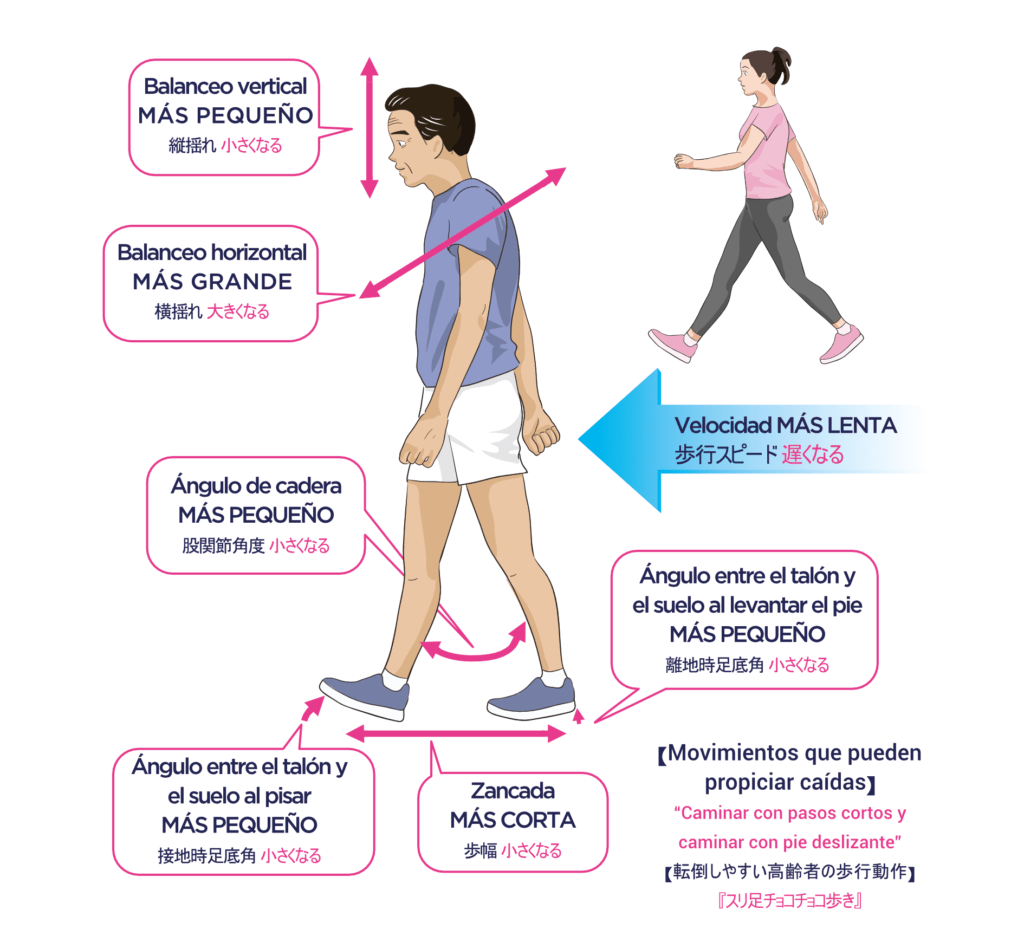
Age-related changes in walking 加齢に伴う歩行の変化

Maintaining a balance between body and mind is essential.

Finally, we would like to remind you of some key rules:

1. Decrease the stress and anxiety.

2. Avoid greed. Live modestly.

3. Find your own way to relaxation.

4. Maintain the warm body. Do not drink cold beverages.

5. Do not overindulge in food. Avoid alcohol and tobacco.

6. Practice aerobic exercise.

7. Laughing a lot and thank you for everything.

8. Have a goal to achieve, a reason to live and a hobby for life.

And one Shiatsu session per week, no doubt.

Director of Jyuku, Shiatsu practice centre.Onoda Shigeru.

Related entries:

Aze Shiatsu Japan

Shiatsu and cancer prevention.

Shiatsu What can we do against ageing?

Shiatsu for patients of COVID persistent or long COVID

Shiatsu and cancer prevention.

Cancer is one of the leading causes of morbidity and mortality in the world. According to the World Health Organisation (WHO), a total of almost 10 million deaths were attributed in 2020, equivalent to almost 1 in every 6 deaths recorded.

Shiatsu as a preventive tool. The International Agency for Research on Cancer estimated that around 18 million new cases will be diagnosed globally in 2020 and this figure will rise to 27 million over the next 20 years.

The most common types of cancer are breast, lung, colon and rectum, and prostate cancer and up to one-third of cancer deaths can be linked to the tobacco useconsumption of alcoholto the obesity and habits as a feeding and a lack of physical activity, according to data from the WHO.

Shiatsu and cancer prevention. Life expectancy and technological developments.

It may come as a surprise that, in general, higher cancer rates occur in countries with longer life expectancy and higher levels of education and standard of living.

How can this be? People's natural reaction should be one of suspicion, surprise or even anger at this fact. Sadly, however, it seems to be accepted without questioning what is happening.

It is indisputable that advances in medicine and technology have greatly aided in the health and well-being of people. However, it should also make us reflect that no matter how many drugs are developed and no matter how much technology progresses, the incidence of cancer, and other diseases such as ischaemic heart disease, is increasing and part of that is linked to the lifestyle we lead in our society today.

It is true that our life expectancy has lengthened, but it's not like we're going to make it to 100 or 200 years. Most of us, or at least I, would be satisfied if we reached 80 or 90 years of age, as long as it is with a good quality of life. Although, given the trend, surely some cardiorespiratory pathology could accompany us and thus, we would have the typical end that we have in today's society.

This has made me reflect for years, that most of the functions of the human body are still primitive and instinctivethat we do not evolve as fast as technology and that the negative impact of the changes we are undergoing as a society (eating worse, exercising less, living under more stress, in short) can be mitigated if we correct these inadequate habits, balance our vital energy and learn to living in harmony with nature.

Because really, the estimates of the incidence of cancers and deaths due to it, without going into the impact on the quality of life of patients, are truly shocking.

With this in mind, and moving on to the practical, I suggest the third medicine: the preventive medicine.

The lessons are very simple and clear. For example: "Zu Kan Soku Netsu" in Japanese, which means "cool head and warm feet".or "Naga Iki" which means "Naga Iki" or "Naga Iki" which means "Naga Iki" which means "Naga Iki".a long breath, leads to a long life".

We all live only one life and the most important thing for a dignified life is health.

For my profession I would, of course, recommend to receive one Shiatsu session per week in a preventive manner.

The Shiatsu as a prevention tool. The Shiatsu is a manual therapy of Japanese origin that aims to maintain and improve health by focusing on the prevention as it helps to balance the body in a holistic way, while also improving the posture and flexibility of muscles and joints. It acts on the bodythe mind and the emotions.

In addition to this, I would like to share some daily practices that are recommended in oriental medicine to maintain good health, based on their philosophy and customs.

For example, in oriental medicine, the word "TEATE" "treatment"means "to lay hands". The word "BYOUKI" "disease" refers to "vital energy disorders".

Let's think, what conditions would favour the development of certain types of cancer?

Firstly, the hypoxiaor decreased oxygen supply to a tissue.

The aforementioned lesson, "a long breath leads to a long life"This means that inhaling deeply and exhaling slowly is the right way to breathe and, consequently, to have a healthier and longer life.

We could easily imagine a frail or sick person breathing very weakly.

To maintain a healthy body, abdominal breathing is important, which is done from the "tanden", a vital region located three fingers below the navel, the area where the centre of our vital energy is located according to oriental philosophy.

Each phase of breathing is linked to certain organs and a defined bodily energy: inhalation to the liver and kidney, pause to the spleen and exhalation to the heart and lung.

Secondly, a low body temperature.

In order for our body and immune cells to function properly, a body temperature of approximately 36,5ºC.

Occasionally, the body temperature will rise as defence mechanism. For example, fever is a natural reaction of the body to an aggression, such as an infection, and involves the activation of immune system cells and antibodies to fight it. Hypothermia, or low body temperature, can lower the immune system's capacity.

Ancient Eastern meanings that identify with a healthy body are, for example, "Zu Kan Soku Netsu" (cool head, warm feet), named above, and "Jyo Kyo Ka Jitsu" (the upper body relaxed and empty, the lower body full and firm).

Both mean that it is important to keep the head or the upper part of the body relaxed and clear, and the feet or the lower part hot, firm and full of energy.

In conclusion, hypoxia and hypothermia may lead to a poorer immune response and thus alter the immune response of the patient. balance of our body.

Things are very simple: let's be careful not to cool the body and let's practise the abdominal breathing.

In short, correcting unhealthy habits and avoiding hypoxia and hypothermia are the basis for maintaining a healthy life, and it is in our hands to reduce the chances of contracting certain cancers and other diseases.

Maintaining a balance between body and mind is essential.

So here are some key rules:

1. Decrease the stress and anxiety.

2. Avoid greed. Live modestly.

3. Find your own way to relaxation.

4. Maintain the warm body. Do not drink cold beverages.

5. Do not overindulge in food. Avoid alcohol and tobacco.

6. Practice aerobic exercise.

7. Laughing a lot and thank you for everything.

8. Have a goal to achieve, a reason to live and a hobby for life.

And one Shiatsu session per week, no doubt.

Shiatsu as a preventive tool. Healthy Exercises.

Performing an ankle rotation. Shiatsu and cancer prevention.
Press the centre of the chest and the pit of the stomach. Shiatsu and cancer prevention.
Performing a spinal flexion. Shiatsu and cancer prevention.
Press a cushion between the knees with both legs bent. Shiatsu and cancer prevention.

Jyuku Shiatsupractor Onoda Shigeru

Related entries:

Benefits of Aze Shiatsu

Aze Shiatsu Japan

What will man be like in the future?

Shiatsu What can we do against ageing?

As we get older we deteriorate. This is inevitable. However, there is a chance that we can slow down the rate of ageing and staying healthy for longer.

60% of the body's constitution is water, and with the passage of time, this concentration decreases, muscles and organs atrophy, fail or become paralysed, and death ensues. The natural process of human beings is to age and die. Being aware of this truth, the reality is that it is also natural for people to want to live longer and in the best possible conditions.

The three leading causes of death in Japan are cancer, heart disease and stroke. Let's talk about the health focusing on the prevention of heart attacks and strokes.

In the traditional medicine China there is a classification according to body build. According to this, those who suffer from heart attacks tend to belong to the group of Ka-Kyo-Jyo-Jitsu Ka-Kyo-Jyo-Jitsuwhich means that the lower part of the body is empty or that there is energy deficiency and the upper part is overloaded.

With this in mind, in what state would we find health?

It would be in the state of Jyo-Kyo-Ka-Jitsu. This means that the upper part is relaxed and the lower part is strong and full of energy as if rooted in the earth.

The state we talked about earlier, Ka-Kyo-Jyo-Jitsu Ka-Kyo-Jyo-Jitsuis the opposite of the ideal state. The lower part is weakened, sluggish, and in the upper part there is a build-up of energy, anger and/or rage, which can also be interpreted as mental stressand the person also has shallow chest breathing. In short, people who tend to suffer from heart attacks are those who accumulate their vital energies unbalanced in the upper part of the body.

What are the physiological characteristics of patients who may suffer a heart attack?

It has been proven that both the heart attacks as strokes have a morning peak incidence, i.e. they tend to occur more in the morning. Although the cause of this is multifactorial, it appears that one of them may be the increase in blood pressure which occurs especially when waking up. This happens because the body tries to raise the blood pressure in order to start daytime activities. Normally the cells of the vascular endothelium prevent an excessive increase in blood pressure and vasodilation occurs to keep the blood pressure stable. But if there is a dysfunction in the cells, dilation of the blood vessels does not occur, and the blood pressure remains high, leading to a health risk.

Predisposing causes:

1. Smoking.             

2. Excessive eating and drinking.                                                   

3. Obesity.

4. Hypertension.            

5. Old age.

6. Large difference between systolic and diastolic blood pressure, known as differential pressure. In general, having a differential pressure of greater than 60 mmHg is considered a risk factor for cardiovascular events, especially in older people.

In reality, people from middle age usually exhibit some of the characteristics listed above and are the group of increased riskAnd especially those people who also practice sports such as running or jogging, gymnastics or take a bath-sauna just after waking up to maintaining health or to lose weight. But they are unaware that such routines can be harmful and inadvertently shorten its life. In fact, as we get older, it takes longer for the body to raise its temperature. Therefore, it would be much more favourable to laze in bed for a long time after waking up.

Also, from my experience as a therapist, I would recommend drinking a glass of weather water or warm water before going to bed and one after waking up.

General preventive measures.

Shiatsu What can we do against ageing? (Although food education also plays a very important role, this time we will focus on physical measures).

1. Attempt to receive Shiatsu at least once a month.

Shiatsu What can we do against ageing? Going for a walk

Shiatsu is a manual therapy of Japanese origin that aims to maintain and improve health, focusing on prevention, as it helps to balancing the body in a holistic wayIt also improves posture and flexibility of muscles and joints. It acts on body, mind and emotions.

2. Take a walk

Brisk walking would be better and walking in the afternoon would be a good time. It is recommended not only to maintain the overall stamina of the body but also to improve the return circulation of the legs, prevent overweight, hypertension and hyperglycaemia.

Shiatsu What can we do against ageing? Strengthening the lower body
3. Strengthening the lower body

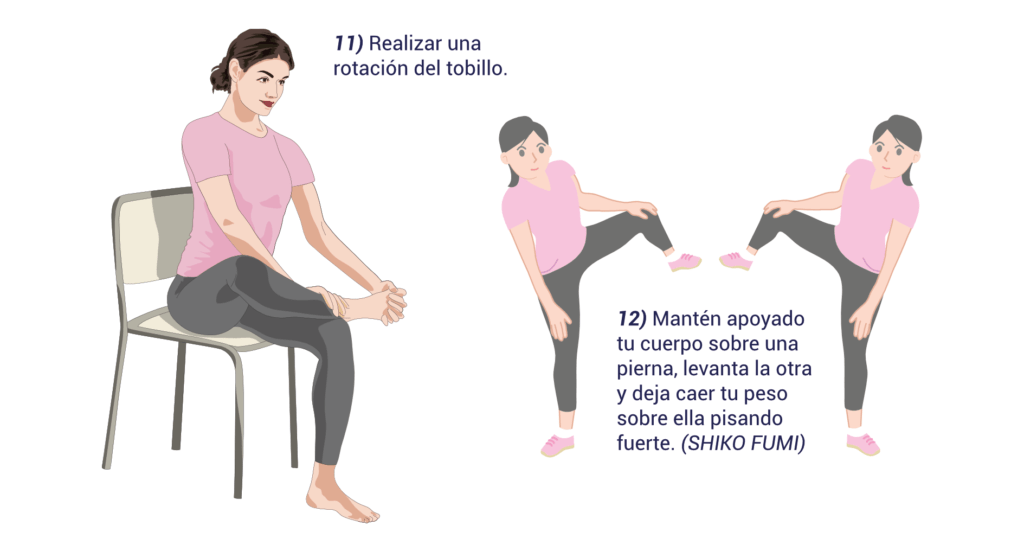
Performing the sumo "shikofumi" exercises: Spread your legs to twice shoulder width. Turn your ankles 45-50 degrees outwards. Lower your waist while keeping your upper body upright, and place all your body weight on one leg, which will serve as a support. When the weight is placed on the supporting leg, the opposite leg rises naturally. Repeat this movement alternately with each leg. With this exercise is balanced not only the lower part, but also the whole body.

4. Ankle rotation.

Shiatsu What can we do against ageing? Ankle rotation

Lock the ankle with the hand on the same side and with the other hand hold the toe of the foot and rotate the ankle slowly, alternately clockwise and counterclockwise.

5. Bathe half the body.

Bathing only up to the waist warms the body very well, but does not overload the heart compared to full body bathing or sauna. Therefore it would be great for older and middle-aged people.

Shiatsu What can we do against ageing? Bathing half the body
6. Stimulate the Sanri point of the leg.

It is situated about 4 toes from the kneecap, diagonally below the lateral condyle of the tibia. It is a very important point and is well known as the point for healing the legs and is used for any treatment as it serves for everything.

It is very common to observe among middle-aged people, especially in Europe, that they have very thin legs and a prominent abdomen "like an apple". This body type is most often associated with heart attacks. To avoid it, it would be ideal to train and maintain a good level of physical strengthThe above recommendations, which apply to everyone, should also be followed.

I encourage everyone to incorporate into their daily routine these simple exercises to improving our health and especially if you suffer from increased abdominal girth, with loss of muscle mass in the buttocks and calves!

Jyuku Shiatsupractor Onoda Shigeru

Related entries:

Benefits of Aze Shiatsu

Aze Shiatsu Japan

What will man be like in the future?